
Request pricing
How it works

How the HighVis Cabinet Works

Etched glass, an edge light, a lit test switch, a door alarm and a backup battery. Here is what each part does, straight from the patent.

HighVis red fire extinguisher cabinet lit in the dark
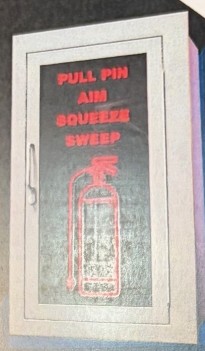
  1. Etched windowThe door glass is etched with a message describing the equipment inside, including use instructions such as Pull, Aim, Squeeze, Sweep and a graphic of the equipment.
  2. Edge lightA light along the edge of the window illuminates the etching. The owner can run it on AC power, on battery, or on AC with battery backup: lit 24/7, or only when the power goes out.
  3. Lit test switchA push momentary switch with a color tinted, illuminated bezel. The lit bezel shows AC power is on. One press moves the cabinet to battery for a timed test.
  4. Monitoring and door alarmA microprocessor watches the system. Opening the access door triggers a local alarm, and a sensor can signal when the equipment is removed.
  5. Battery backupThe backup battery powers the controller when AC power fails.

Source: U.S. Patent 11,143,372, Safety device cabinet with a safety switch having an integrated light. Issued October 12, 2021. Inventors Steve Wriggle and Dorothy J. Wriggle.

Etched / edge lit

Most cabinets rely on a sticker or a painted label. HighVis etches the message into the door glass: the type of equipment, a graphic of it, and the use instructions. A light source along the edge of the glass sends light through the window, and the etched lines catch it and glow. The result is a door you can read from a distance, in a dark room, without a separate sign.

Lit 24/7 or only when the power goes out

HighVis has two ways to run. Leave it lit around the clock, the way nightclubs and venues use it, so the cabinet works as a constant visual reminder of where the extinguisher is and how to use it. Or set it to light only during a power outage, when it switches to its backup battery and glows as the room goes dark.

Integrated tech

SGLS Simple Touch Solution

The cabinet has a push momentary switch with a color tinted, illuminated bezel. When AC power is on, the bezel glows, so a quick look tells you the cabinet is powered. Pressing the switch moves the system to battery power for a timed test. In the patent's example, one press runs a 15 minute test and additional presses select other durations.

AC powered door alarm

A monitoring device tells the microprocessor when the access door opens, and the cabinet sounds a local alarm. The patent also describes a sensor that signals when the equipment itself is removed.

Battery backup

A backup battery powers the microprocessor during an AC failure. The owner chooses whether the edge light runs on AC, on battery, or on AC with battery backup.

Color coded

Each cabinet type has its own color so people can tell them apart at a glance: red and yellow for fire extinguishers, aqua for fire hose, blue for AED. The patent describes the red tinted test bezel and blue or aqua etching for water-related cabinets such as fire department connections.

See it in the dark

HighVis red extinguisher cabinet, lights off
Questions

Frequently asked questions

What is the SGLS Simple Touch Solution?

It is the HighVis built-in test switch: a push switch with an illuminated bezel. The lit bezel shows AC power is on, and a press runs a timed battery test.

How long is the battery test?

In the patent's example, one press runs a 15 minute test and more presses select other durations. Ask us about the settings on current production units.

Who invented the HighVis Cabinet?

The patent lists Steve Wriggle and Dorothy J. Wriggle as inventors. Read more about the inventor.

Bulk and project orders

Price HighVis for your building

Tell us the building, the cabinet types and the quantity. We reply with pricing and lead time.

Request pricing